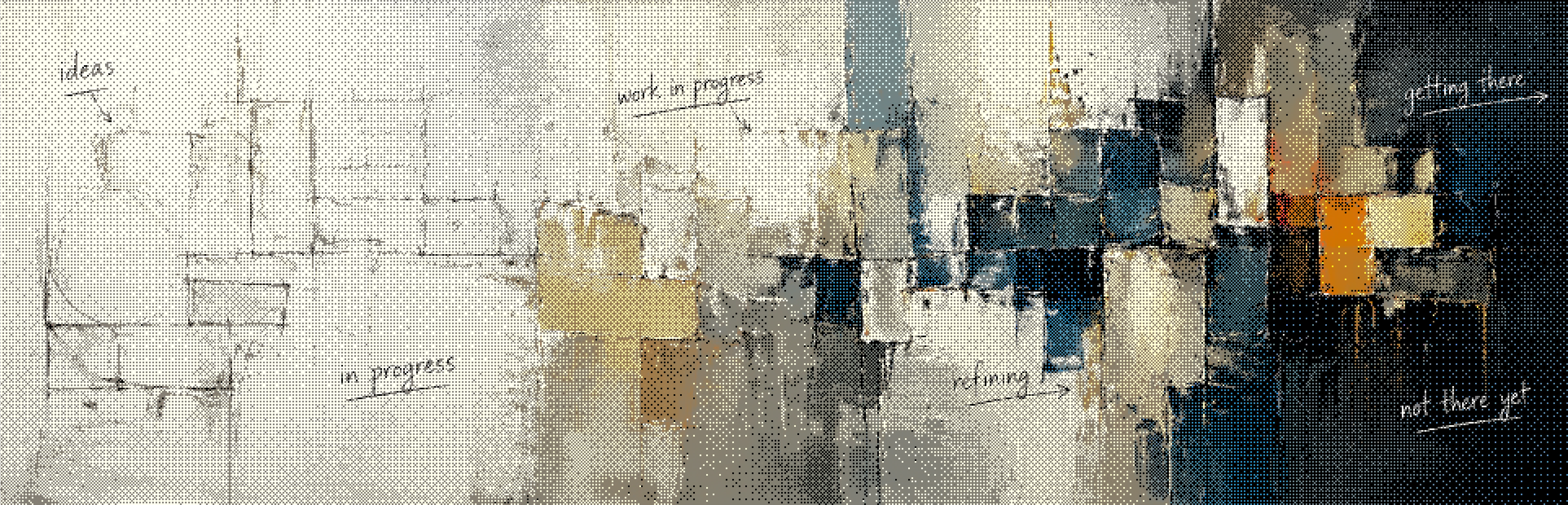
Speed was supposed to be the hard part. Turns out it wasn't.
The AI is doing exactly what it was built to do. It's fast, it's fluent, it produces something usable in seconds. The problem is the builder who takes that output, nods, and ships it. Who moves on before asking whether good enough is actually good.
Over the past year I've been building heavily with Cursor and Claude Code, moving faster than I ever have. And I've watched other people do the same, assembling products in hours that would have taken weeks, which is genuinely remarkable. But scrolling through what people are putting out, I kept noticing something. Not that AI was involved (who cares). But that nobody had been paying attention. The spacing was slightly off. The copy was competent but bloodless. The interactions worked but didn't delight. Everything was correct and nothing was considered.
The products all looked like each other, because they were all made the same way.
This is structural, not accidental. Models train on the accumulated record of what already exists, they learn the centre of gravity of human output and pull toward it. AI is extraordinarily good at producing things that resemble things that already exist. It optimises toward the middle. It knows what a button looks like, what a landing page says, how an onboarding flow works. It can execute any of these fluently.
What it cannot do, at least not yet, is push at the edges. It cannot feel the discomfort of a design that isn't quite right and sit with that discomfort long enough to understand why. It cannot make the judgment call to remove the thing that technically works because something better is possible. It cannot care.
And here is what I think gets missed in most conversations about AI and creative work: humans don't just use software. We project ourselves into it. We see our products as extensions of who we are, our taste, our values, our sense of what the world should feel like. When a product is considered, people feel it. They can't always articulate it, but they feel it. That felt quality is not a detail. It is often the entire reason someone chooses one product over another.
So what does this mean for people who build things?
I think it creates a gap — and an opportunity.
The builders who will stand out in the next few years are not the ones who use AI most, or fastest. They are the ones who use AI for everything it's good at: the scaffolding, the boilerplate, the first draft, the grunt work. And then bring something AI cannot bring to the last mile. A point of view. An opinion about what good looks like. The confidence to reject the output that is technically correct but somehow hollow.
I've started calling this Taste Engineering.
The framing matters to me. Engineering because this is systematic, a repeatable practice of knowing how to direct AI, how to evaluate its output, how to iterate quickly toward something genuinely good. Not vibes, not magic. A craft. Taste because the differentiating input is human judgment, an accumulated sense of what works, what resonates, what makes someone pause and notice that someone cared.
I have been a founder for over ten years. I am technical enough to build and opinionated enough to care about how things look and feel. For most of that time those two things felt slightly in tension, the pragmatism of shipping versus the perfectionism of getting it right. AI has changed that equation. For the first time, moving fast and doing it with care are not in conflict. You can have both, if you know how.
The tools are becoming available to everyone. The taste is still yours to bring.